Louvre vs PVC Pergola:
Which Works for Singapore?
Smart sliding louvre systems and fixed PVC panels take opposite approaches to outdoor coverage. Two different philosophies. One tropical climate. Here's what that actually means.
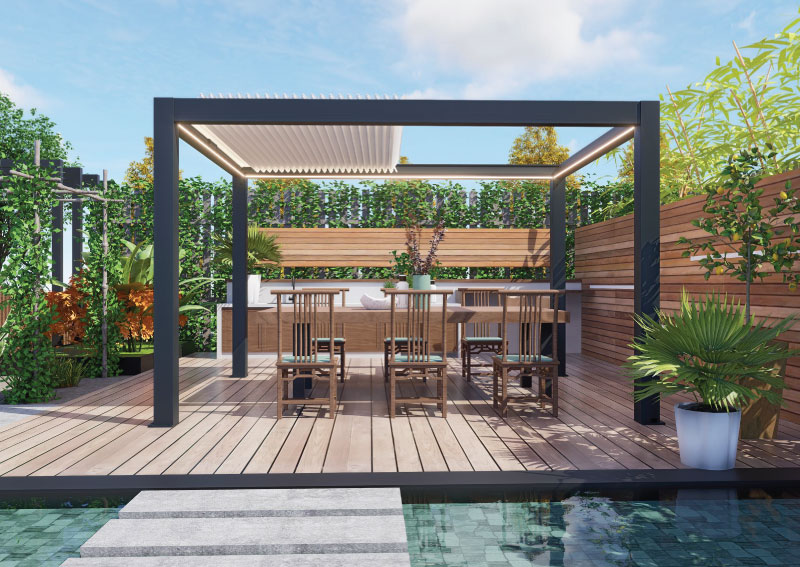
Why Singapore Changes the Calculation
Temperate countries use pergolas seasonally. In Singapore, your system faces four simultaneous year-round demands. Your choice determines how well you handle each one.
Year-Round UV Intensity
Singapore sits 1 degree north of the equator. UV exposure is not seasonal: it's constant and intense every single day. Materials that degrade under sustained UV exposure become a liability within years. Your roofing system takes direct solar load 365 days per year - and your choice of material determines how long it holds up.
Sudden Tropical Rain
Afternoon downpours arrive fast with no warning. Fixed systems protect passively. Adjustable systems let you respond in real time and breathe again when the rain clears.
High Humidity
Daily humidity of 70-90% causes condensation on cool surfaces. Solid panels trap moisture underneath. Adjustable louvres maintain the airflow that prevents buildup.
Wind at Elevation
High-rise balconies and rooftop terraces face gusts that stress fixings and frames. Engineered louvre systems close aerodynamically to reduce wind load. PVC panels, especially in cheaper grades, are more vulnerable to wind damage and panel displacement at height.
How a Sliding Louvre Pergola Works
Motorized aluminium blades that rotate on demand. Each component is engineered to address Singapore's climate - not just tolerate it.
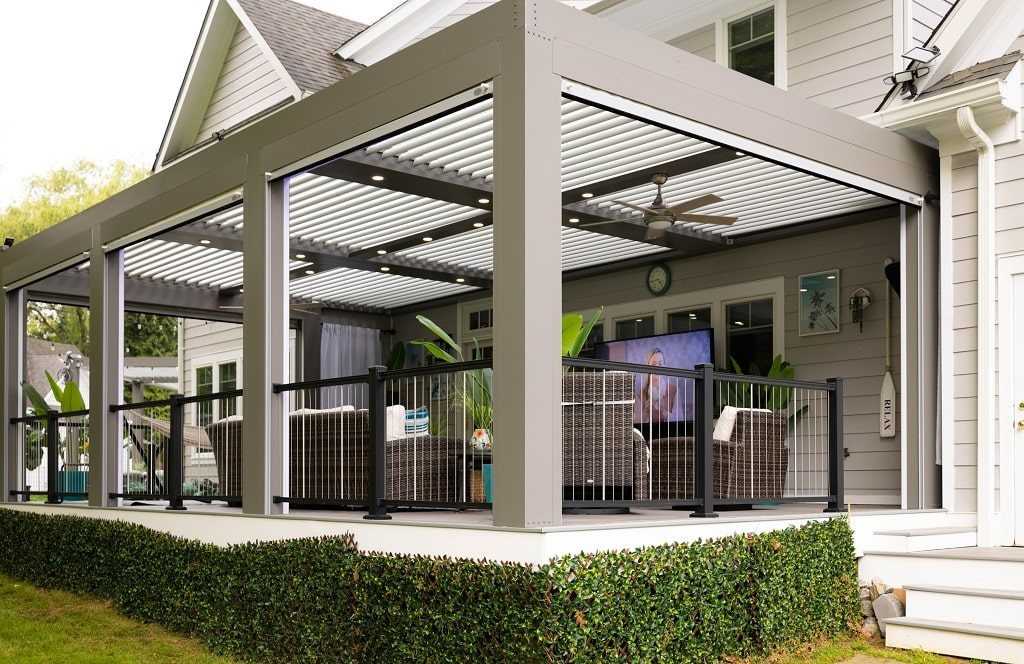
Extruded Aluminium Blades
Each blade is extruded aluminium with a powder-coat finish. The material provides structural strength without excessive weight, resists corrosion in coastal humidity, and holds its appearance for years without refinishing. Blades rotate between 130 and 150 degrees depending on the system model.
Motorized Drive System
Blades sit in a track system connected to a motorized drive. Activate via remote control, wall switch, or smartphone app. All blades rotate in unison to any angle between fully open and fully closed - you choose where to stop them.
Integrated Drainage System
When closed, blades interlock and form a weatherproof roof surface. Gutters built into the blade edges channel water away through the posts and into drainage - no separate gutter system needed, and no pooling overhead.
Automatic Weather Sensors
Rain sensors detect moisture and close the blades without you needing to rush outside. Wind sensors monitor gusts and retract when speeds reach damaging levels. Sun sensors track the sun's position through the day and adjust blade angle to maintain consistent shade.
Smart Home Integration
Compatible with Google Home, Alexa, and Apple HomeKit. Set automation routines: close at sunset, open at dawn, adjust based on weather data. One system unified with the rest of your home's smart controls.
Fixed Panels: Simpler by Design
PVC and polycarbonate panels mount to an aluminium or steel frame. No motors, no sensors, no electrical work. The same level of protection in every condition, every time - which is both the benefit and the limitation.
Heat Buildup: Fixed solid panels create a greenhouse effect when the sun beats down. Singapore midday conditions make the space underneath uncomfortable despite shade from above.
Condensation: The temperature difference between humid outdoor air and the cooler panel underside causes water to form and drip onto furniture and flooring.
Rain Noise: Heavy tropical rain on plastic panels creates significant noise. Having a conversation underneath during a downpour becomes difficult.
UV Degradation: Cheaper PVC grades yellow and become brittle under Singapore's sustained UV intensity within a few years of installation.
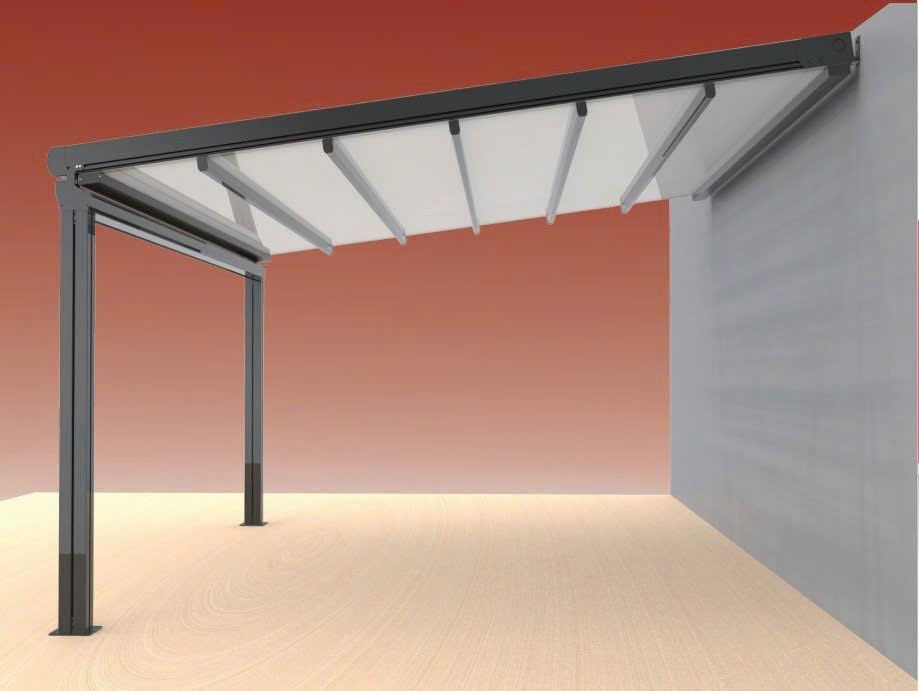
How the Two Systems Compare
Six factors that determine your daily experience with either system in Singapore's climate. Read across each row to see where the real differences lie.
Which System Fits Your Situation?
Neither system is objectively better. The right choice depends on how often you use the space, your budget, and how much comfort matters to you in Singapore's heat.
When Louvre Makes Sense
Daily or Frequent Use
The climate control benefit compounds with regular use. Morning coffee, afternoon shade, evening entertainment - you'll notice the difference every time you're out there.
Premium or Landed Properties
A quality louvre system matches the standard of high-end condominiums and landed homes. A budget PVC system on a premium property creates aesthetic mismatch that's hard to ignore.
Exposed High Locations
Rooftop terraces, coastal properties, and high-rise balconies face more extreme conditions. The louvre's adjustability and wind-rated engineering deliver genuine value here.
Long-Term Ownership
The higher upfront cost spreads across many years of use. If you plan to stay in the property long-term, the investment makes more sense than for a short rental situation.
When PVC Makes Sense
Budget Constraints
If the louvre price point does not fit your financial situation, a quality PVC system still provides functional outdoor coverage. Do not pay for features you won't actually use.
Simple Coverage Needs
A covered walkway, utility area, or carport does not need climate control. Basic rain protection is the requirement - PVC delivers it at a lower cost.
Rental Properties
If you're installing for tenants or plan to sell within a few years, the lower upfront cost is more appropriate. Premium features rarely convert to proportional rental yield.
Occasional Use
Rarely-used spaces don't justify premium investment. If the outdoor area is seldom occupied, accepting the comfort limitations is a reasonable tradeoff for lower cost.
Approvals and Regulations
Both system types may require formal approval before installation. Factor these into your timeline - approvals can take weeks regardless of which pergola you choose.
BCA Approval
The Building and Construction Authority oversees structural modifications in Singapore. Whether your pergola requires BCA approval depends on the structure's size, location, how it attaches to existing buildings, and whether it's classified as a temporary or permanent installation. Both louvre and PVC systems can trigger this requirement - the complexity of a louvre system does not automatically mean harder approval, but it does require professional engineering documentation.
MCST for Condominiums
Condominium residents need Management Corporation Strata Title approval for external modifications. This is separate from BCA and can be more restrictive. Some MCSTs restrict pergola types, colors, or sizes entirely. Check your development's guidelines before committing to either system.
Timeline Reality
Louvre systems require site assessment, engineering documentation if needed, fabrication, electrical work, and calibration. PVC systems are shorter due to less complexity. Neither is a same-week project once approvals are factored into the schedule.